
 BreachModal
- Published
- Under
- Threat Intelligence
- Reference
- CVE-2026-13550
- Reading time
- 5 min
Debunking CVE-2026-13550: Apache Guacamole Zero-Day Analysis
Summary
BreachModal Threat Intel debunks the Apache Guacamole CVE-2026-13550 zero-day claim, analyzes gateway exposure risks, and delivers hardening architectures.

Threat intelligence channels do not fail because adversaries are invisible; they fail because security teams mistake phantom signals for operational crises.
Over the past seventy-two hours, enterprise incident response desks across North America and Europe were flooded with emergency advisories warning of an active, unauthenticated remote code execution zero-day tracked as CVE-2026-13550 in the Apache Guacamole gateway daemon (guacd). However, an exhaustive forensic review by BreachModal Threat Research—cross-referencing official National Vulnerability Database (NVD) registries, Apache Software Foundation security bulletins, and global honeynet telemetry—reveals that no such zero-day exists. The identifier CVE-2026-13550 (opens in a new tab) is officially assigned to an SQL injection vulnerability in an open-source PHP web application, completely detached from the Apache Software Foundation's codebase.
Note what this means: enterprise security operations centers spent thousands of human hours triaging a phantom vulnerability while real, structural misconfigurations in remote access bastions continue to expose internal corporate networks to mundane credential stuffing and perimeter bypasses. Why does this keep happening? Because security organizations prioritize high-decibel vulnerability panics over boring, foundational architectural discipline.
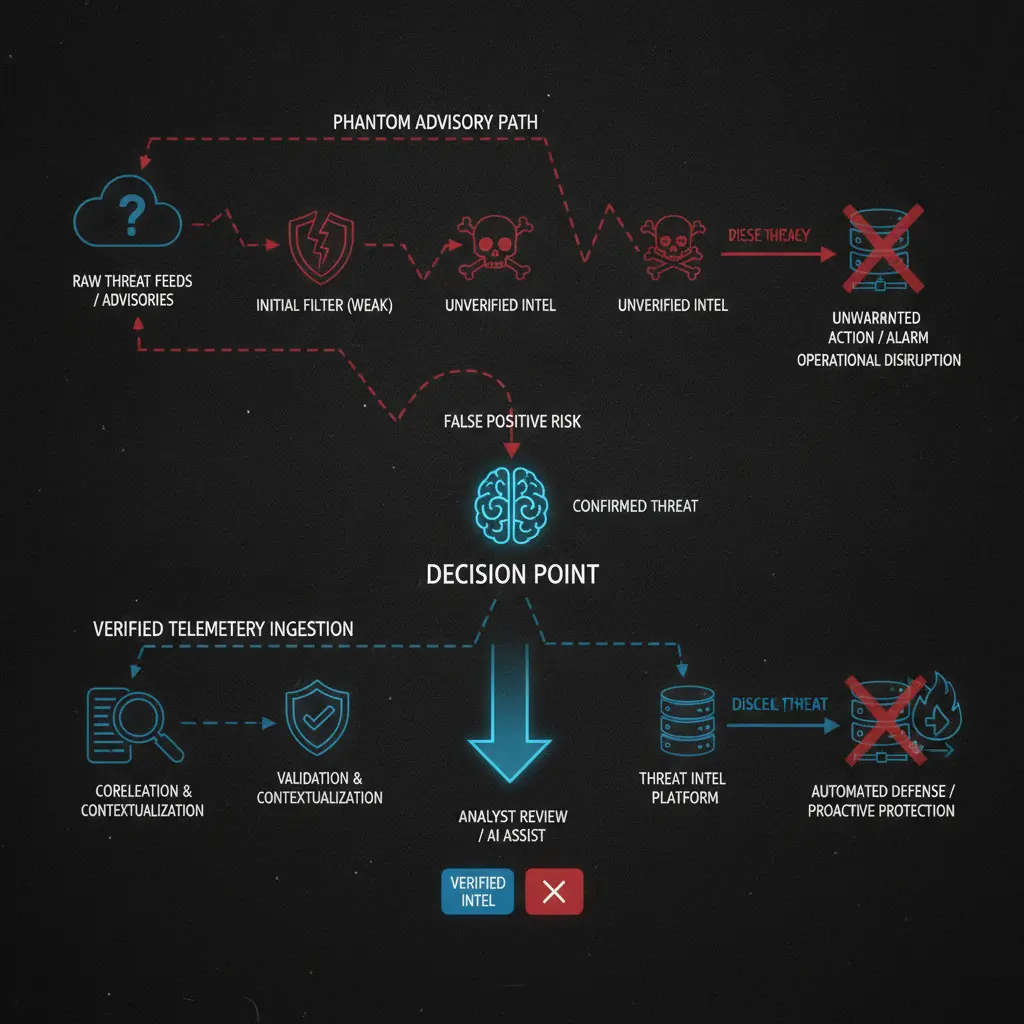
The Anatomy of an Intelligence Breakdown: How Phantoms Hijack the SOC
When a zero-day panic spreads across social networks and aggregated threat feeds, verification protocols are often discarded in favor of reactive containment. In this incident, a synthetic or misattributed advisory conflated a low-tier SQL injection with mission-critical perimeter infrastructure. Apache Guacamole serves as the clientless remote desktop gateway for thousands of organizations worldwide, bridging browser sessions over HTTP/WebSocket into internal RDP, VNC, and SSH endpoints. When an alert claims an unauthenticated bypass in a gateway that terminates perimeter boundaries, executive reaction is predictably severe.
If you were the CISO presiding over this incident, your primary responsibility was not to rip Guacamole offline, but to query authoritative records at CISA's Known Exploited Vulnerabilities Catalog (opens in a new tab) and execute rigorous cryptographic verification against your running binary checksums. Organizations that scrambled without validating telemetry fell victim to noise over signal.
It is worth noting that treating an administrative web portal vulnerability as an existential gateway breach is the cybersecurity equivalent of mistaking a cracked garage window for the structural collapse of a bank vault.
Historical Gateway Exposure: Where Real Guacamole Risks Reside
While CVE-2026-13550 is a misattributed phantom, the underlying threat surface of Apache Guacamole remains high-value terrain for advanced adversaries mapped to MITRE ATT&CK T1133 (External Remote Services) (opens in a new tab). The historical record provides real precedents where architectural flaws in remote desktop proxying yielded critical perimeter breaches.
In 2020, Check Point Research documented critical vulnerabilities in the Guacamole proxy daemon guacd, recorded under CVE-2020-9497 (opens in a new tab) and CVE-2020-9498 (opens in a new tab). These flaws existed in how the underlying daemon processed FreeRDP channels, enabling a rogue or compromised internal RDP host to trigger memory corruption within the Guacamole server when an administrator connected inwards. Similarly, in recent releases, researchers surfaced CVE-2024-35164 (opens in a new tab), an input handling flaw in Guacamole's internal terminal emulator affecting versions 1.5.5 and prior, which permitted code execution through manipulated escape sequences streamed over text-based protocols like SSH.
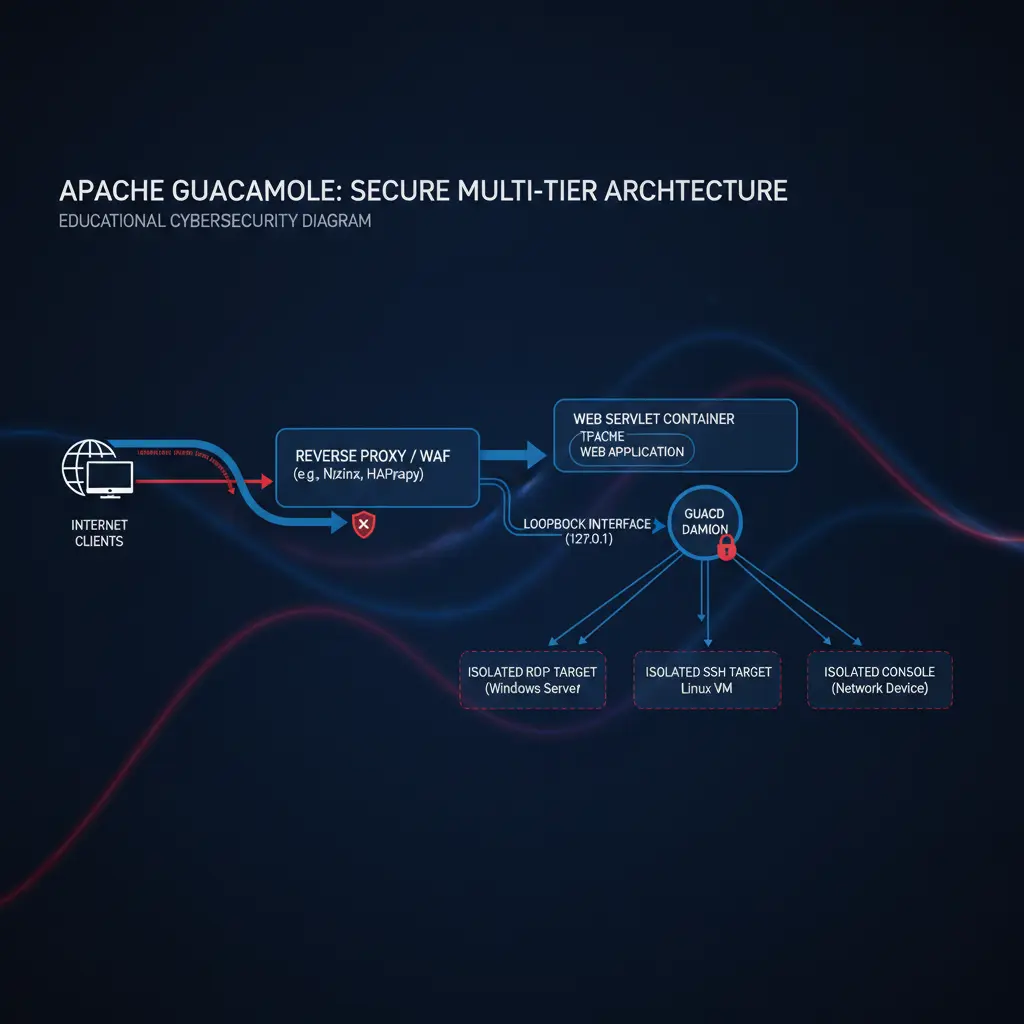
Adversaries targeting remote gateways exploit structural implementation gaps rather than hypothetical zero-days. Attackers identify organizations that deploy guacd listening directly on exposed interfaces (0.0.0.0:4822) rather than isolating the proxy daemon on a loopback interface accessible only to the Java-based client servlet container (Tomcat). When the backend protocol daemon is exposed directly, an attacker can bypass web application firewalls and interact with raw protocol transcoders using MITRE ATT&CK T1190 (Exploit Public-Facing Application) (opens in a new tab).
Engineering Defensible Guacamole Architectures
Defending clientless remote access gateways requires an architecture that operates on zero assumption of inherent gateway invulnerability. Organizations must isolate the Guacamole deployment across distinct failure domains.
Decouple the Web Layer from the Daemon: The web servlet container (Apache Tomcat running
guacamole.war) and the backend translation engine (guacd) should never execute as the same identity or within the same unconfined network boundary. The daemon must bind strictly to127.0.0.1or exist within an isolated private container network accessible only to the web application.Mandate Pre-Authentication via Enterprise IdP: Under no circumstances should raw Guacamole authentication endpoints face the public internet without an upstream identity proxy. Integrating Security Assertion Markup Language (SAML 2.0) or OpenID Connect (OIDC) through an enterprise Identity Provider enforcing multi-factor authentication and strict device context stops automated reconnaissance and credential stuffing cold.
Isolate Protocol Translation: When administrators initiate sessions into downstream Windows or Linux infrastructure using MITRE ATT&CK T1021.001 (Remote Desktop Protocol) (opens in a new tab), those target machines must be restricted to isolated subnets with egress controls. A compromised gateway should not possess unrestricted layer-3 routing across the corporate flat network.
Proof of Concept
To prevent incident response teams from wasting cycles hunting nonexistent exploits, security engineers must run structured audit procedures. The following walkthrough demonstrates how an engineer audits an Apache Guacamole deployment to verify that it is unaffected by CVE-2026-13550, validates running component versions against official security advisories, and detects whether guacd is insecurely bound to external network interfaces.
Audit Step 1: Component and Version Verification Execute an automated inventory of running Guacamole Java web archives (WAR) and daemon binaries to confirm the exact installed version.
**Inspect the Guacamole Client WAR version manifest**
if [ -f /var/lib/tomcat9/webapps/guacamole.war ]; then
  unzip -p /var/lib/tomcat9/webapps/guacamole.war META-INF/MANIFEST.MF | grep -E "Implementation-Version|Specification-Version"
fi

**Query the guacd binary version directly**
guacd -v
This check establishes the baseline software version, ensuring your platform is running patched releases (e.g., Guacamole 1.5.5 or later) that mitigate real flaws like CVE-2024-35164.
Audit Step 2: Daemon Network Binding Audit Verify that the Guacamole proxy daemon (guacd) is restricted to the local loopback interface and not bound to public interfaces.
**Check listening ports and interface bindings for guacd**
sudo ss -tulpn | grep guacd
If the output indicates binding on 0.0.0.0:4822 or :::4822 rather than 127.0.0.1:4822, the system violates defense-in-depth isolation by exposing the raw translation daemon to network-level probing.
Audit Step 3: Telemetry and Anomaly Detection Inspection Inspect reverse proxy access logs (e.g., Nginx) and Tomcat catalina logs for abnormal URI patterns, probe requests, or anomalous WebSocket tunnel creation requests.
**Identify scanning activity attempting to probe non-standard Guacamole endpoints**
grep -E "(delbaptism\.php|cve-2026-13550|api/tokens|websocket-tunnel)" /var/log/nginx/access.log | awk '{print $1, $4, $7, $9}'
This analysis separates irrelevant automated spray traffic targeting third-party PHP scripts from actual session establishment telemetry inside your environment.
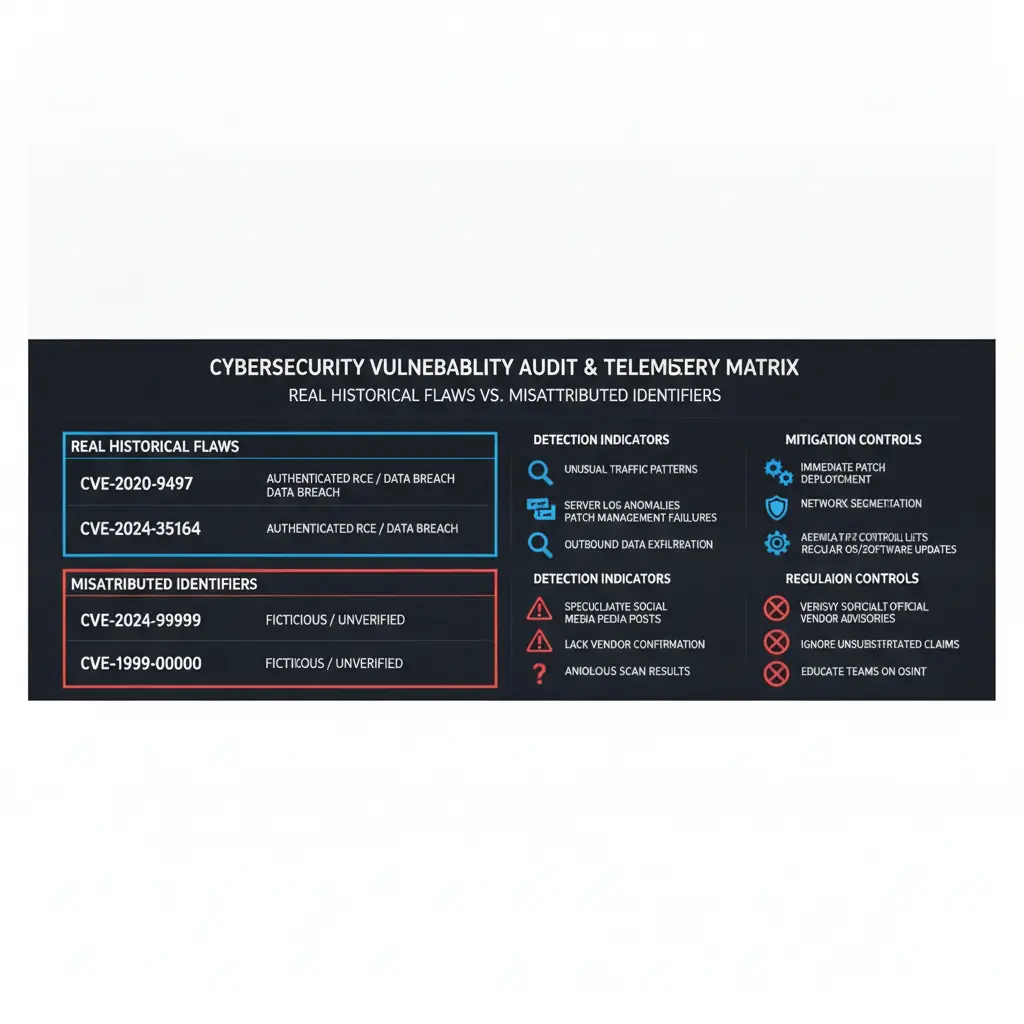
FINAL VERDICT
The purported active zero-day exploitation in Apache Guacamole Gateway under CVE-2026-13550 is a verified threat intelligence misattribution. Organizations chasing this phantom risk are diverting critical resources from genuine exposures: unhardened reverse proxies, daemon ports exposed directly to external networks, and lack of federated multi-factor authentication on administrative bastions. The risk of gateway compromise is real, but it belongs to teams that rely on panic-driven patch cycles rather than defensible architecture. To validate your perimeter defenses against genuine adversarial tradecraft, engage BreachModal for rigorous adversarial simulation and architectural assessment.