
 BreachModal
- Published
- Under
- Threat Intelligence
- Reference
- CVE-2026-109618
- Reading time
- 3 min
PHP2Shell RCE: Active Exploitation of CVE-2026-109618
Summary
PHP2Shell (CVE-2026-109618, CVE-2026-109619) enables unauthenticated RCE in PHP core. Learn how to patch, detect, and mitigate active Potassium botnet attacks.

The core of the internet's most ubiquitous runtime is currently being weaponized before application logic even has a chance to load.
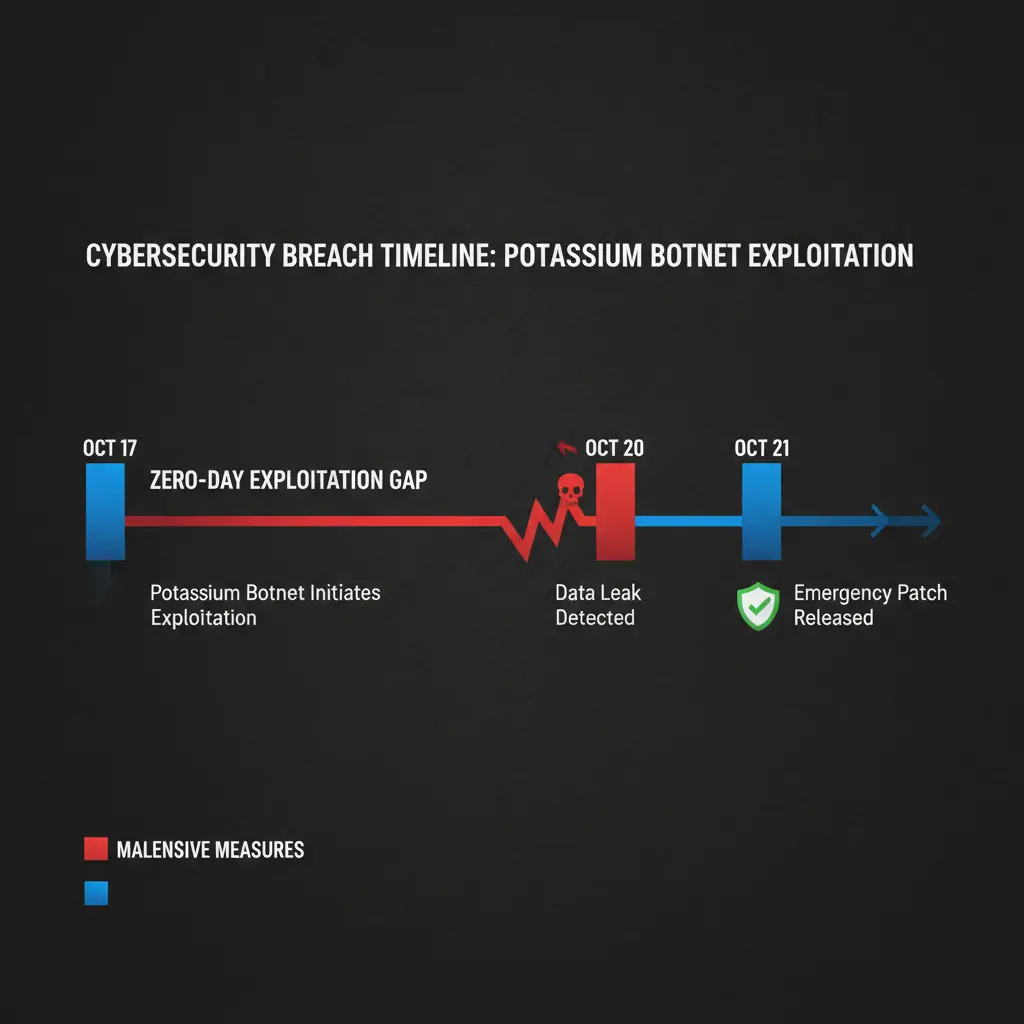
According to threat intelligence from AWS, Arctic Wolf Labs, and Sophos, threat actors began exploiting CVE-2026-109618 and CVE-2026-109619 (both carrying a CVSS of 9.8) as early as October 17, 2026—four days before the PHP Group's emergency patch. The vulnerabilities, collectively dubbed 'PHP2Shell,' were discovered by researchers from Wiz, OpenAI, and Calif. Evidence shows the Potassium botnet (a Mirai variant) is actively dropping Linux ELF loaders from staging IPs like 92.118.112.100 onto unpatched servers, hijacking the Zend Engine's memory management to execute arbitrary commands without authentication.
Note what this means: the vulnerability exists entirely below the application layer. No amount of secure coding in WordPress, Laravel, or custom middleware can stop this attack. When infrastructure fails at the memory management level, our entire defensive stack built on top of it collapses. We are paying the technical debt of C-based memory handling in modern web architectures, and the cost is complete system compromise before the first line of user code is executed.
The Anatomy of an Engine Failure
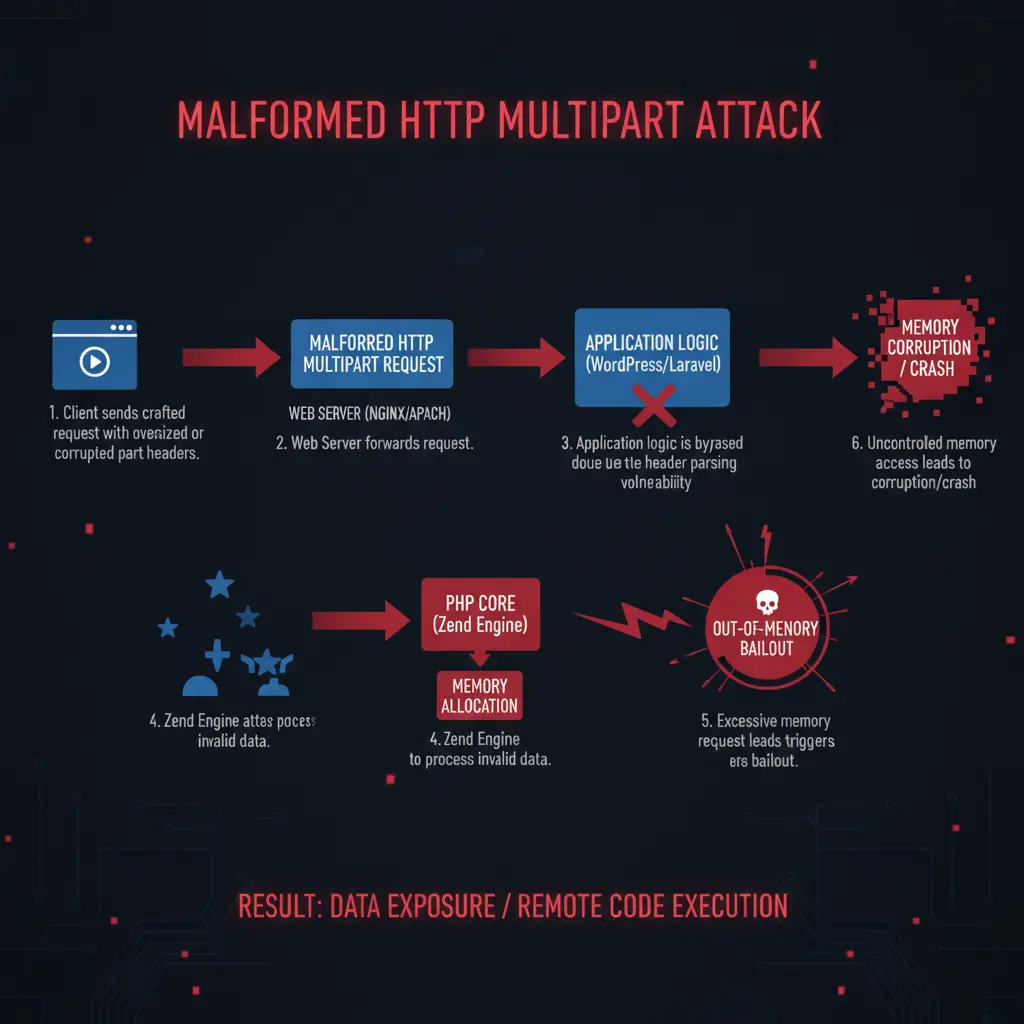
At the heart of CVE-2026-109618 is an out-of-memory (OOM) corruption flaw within rfc1867.c. When PHP hits an OOM error while parsing a crafted multipart POST request, it initiates an emergency abort via zend_bailout() using C's longjmp(). It turns out that hoping a catastrophic memory failure will fail gracefully is not a viable security strategy. The abort leaves an internal data structure marked as initialized without its backing memory. When the cleanup routine executes, it treats uninitialized heap pointers as valid, allowing attackers to hijack the control flow.
CVE-2026-109619 compounds this with a use-after-free (UAF) condition across consecutive requests in persistent worker pools like PHP-FPM and Apache mod_php. When a worker terminates abnormally, module-level global variables retain dangling pointers. The next request to hit that recycled worker accesses stale memory, leading to cross-tenant memory disclosure or remote code execution.
The Exploitation Landscape
Threat actors are not waiting for patch cycles. AWS recorded exploitation attempts against their MadPot honeypots originating from commercial anonymizer networks 96 hours before the embargo lifted. Following the October 21 patch release, scanning volume surged into the millions of requests per hour.
Organizations running Apache mod_php are at the highest risk, as the attacks execute directly within the web server process. If you were the CISO here, you would be looking for unauthorized shell spawns (/bin/sh, /bin/bash) or network utility calls (curl, wget) originating from web-worker accounts like www-data in your EDR logs.
Proof of Concept
Environment Verification: Identify if the target is running a vulnerable PHP version (8.2.0 - 8.5.11) exposing an HTTP endpoint.
bash curl -I http://target-server.com/ **Look for X-Powered-By: PHP/8.4.26**Triggering the OOM Condition (CVE-2026-109618): Send a malformed multipart/form-data request designed to exhaust memory allocation before parsing completes, forcing the vulnerable
zend_bailout()routine.http POST / HTTP/1.1 Host: target-server.com Content-Type: multipart/form-data; boundary=------------------------crashboundary Content-Length: 50000000 --------------------------crashboundary Content-Disposition: form-data; name="payload"; filename="payload.txt" [Massive padding to trigger OOM before boundary closure...]Observing the Crash: A successful trigger of the unpatched memory corruption will result in the worker crashing, typically returning an HTTP 502 Bad Gateway or dropping the connection entirely, rather than a standard PHP error.
FINAL VERDICT
PHP2Shell (CVE-2026-109618) is a stark reminder that the foundational components of the web remain highly fragile. The risk is borne entirely by organizations that treat infrastructure updates as quarterly chores rather than daily operational imperatives. Applying package manager updates is not enough; organizations that fail to restart their resident PHP-FPM or Apache workers after patching are choosing the illusion of security over actual defense. Patch to PHP 8.5.12, 8.4.27, 8.3.36, or 8.2.35 immediately, restart your services, and audit your edge logs. For advanced adversarial simulation and incident response regarding PHP2Shell, engage BreachModal Services.